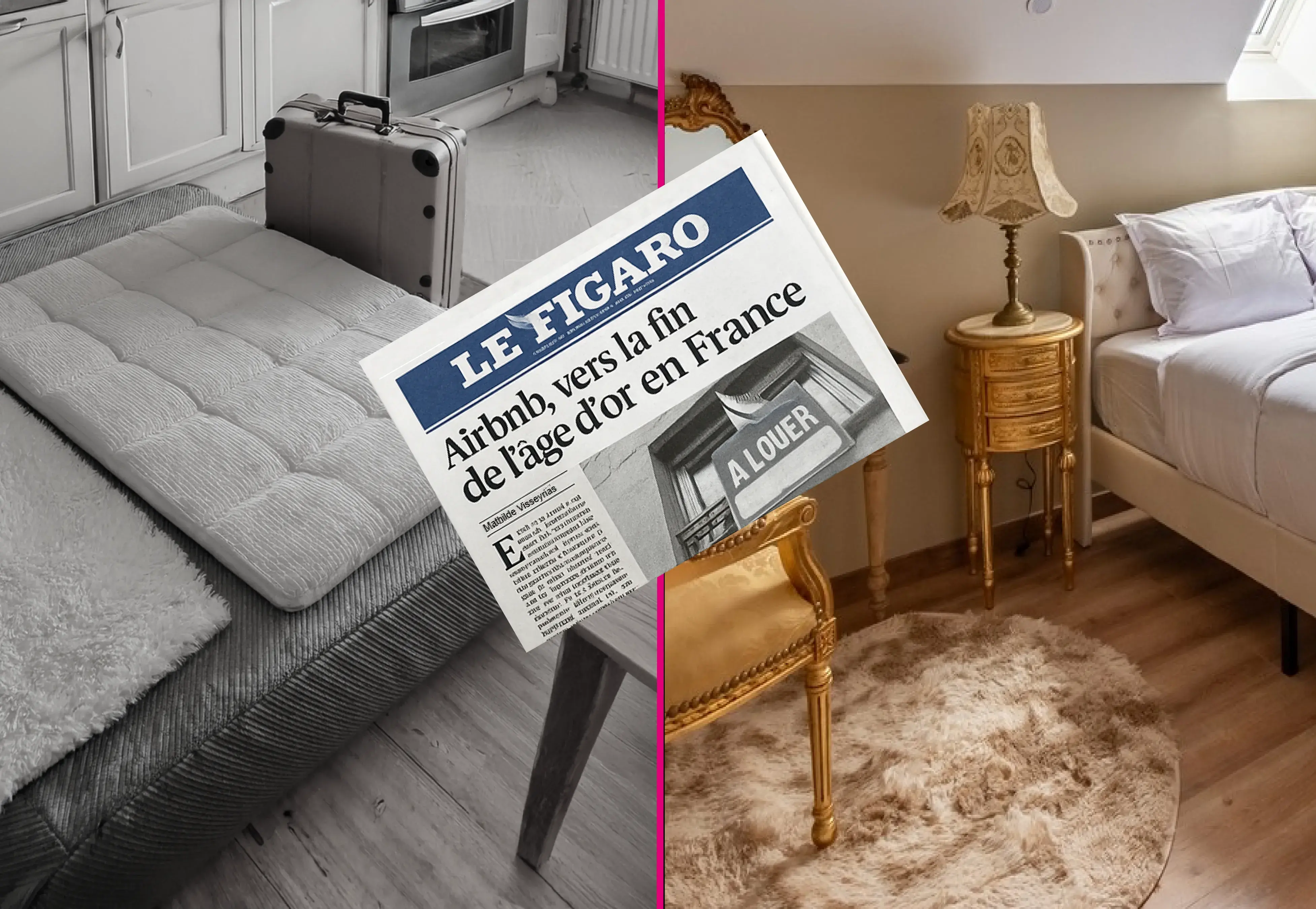
At a time when rental pressure is increasing and regulations are multiplying, many property owners are considering turning the page on Airbnb.
Tired of administrative complexity, changing taxation, or the pressure of a demanding model, they are thinking about returning to long-term residential leasing, convinced they’ll find more stability and equivalent profitability there.
But the real issue is not “choosing between Airbnb and traditional leasing.”
Today, a third model has emerged—often little-known—sitting at the crossroads between the two: the commercial lease with a professional operator, such as the OIQIA model.
This structure combines the profitability of short-term rentals with the security of a fixed income.
This article breaks down these three rental models—their strengths, their limitations, and above all, which type of investor each is suited for.
And at the end of the article, download our complete comparative guide to understand the real fiscal and legal differences.
It’s a familiar story: an enthusiastic owner starts out on Airbnb, attracted by the promise of high returns and flexible management.
At first, everything seems simple: they entrust the property to a concierge service, adjust prices, exchange messages with travelers—convinced that “it will run by itself.”
But reality on the ground is often more nuanced: growing competition, irregular occupancy, falling prices, demanding reviews… Management requires time, responsiveness, and a true strategy.
Little by little, the dream of freedom can turn into a full-time job—sometimes for declining results.
And it’s often at that point that some decide to stop everything, thinking that a yearly lease will finally bring them peace of mind.
But is that really the only solution? Not necessarily.
Because the Airbnb model can work—and work very well—provided it’s in the hands of a professional, experienced manager, capable of optimizing the property’s visibility, using the right management and pricing tools, and diversifying listings across multiple platforms.

The current problem is not furnished rental itself. It’s the illusion that one can “try out” short-term rentals with little means and little professionalism while expecting high results.
Furnished rentals are attractive due to their favorable tax treatment and earning potential—but they require a true strategy.
It’s important to know that they encompass two distinct operating models, opposite in function and goals.

Before choosing a model, it’s essential to understand that each strategy corresponds to a different investor profile.
Behind the same term “furnished rental” actually lie three distinct approaches—each with its advantages, constraints, and management logic.
The first approach corresponds to traditional furnished rental (long-term): a furnished home rented yearly under the 1989 law lease. Ideal for investors seeking stability and minimal management effort.
Advantages:
• Regular, secure income.
• Favorable tax system (depreciation under LMNP real).
• Zero management if entrusted to an agency.
Disadvantages:
• Lower rents than tourist rentals.
• Risk of unpaid rent.
• Restricted property recovery conditions.
The second approach is furnished tourist rental (Airbnb, Booking, concierge services): rental by the night or week, directly or through a concierge.
Advantages:
• Potentially high returns.
• Flexibility: ability to use the property personally.
• Strong tax advantage under LMNP real (depreciation).
Disadvantages:
• Uncertain, seasonal income.
• High personal involvement or dependence on a concierge.
• Growing regulatory risks (quotas, permits, change of use).
An attractive but demanding model, reserved for those who want to be actively involved.
Finally, the commercial lease with a professional operator represents a third way: that of the long-term investor, who prioritizes income regularity and asset appreciation.
The owner signs a fixed commercial lease (3 to 10 years) with an operator who manages the property and pays a fixed rent.
Advantages:
• Guaranteed rent indexed to commercial leases.
• Zero vacancy or management risk.
• Zero operating costs (property tax, energy, maintenance…).
• Asset stability and property appreciation.
Disadvantages:
• Different taxation for individuals (rental income).
• VAT recoverable only in certain arrangements.
In summary, furnished tourist rentals are not a unique model.
.jpg)
The commercial lease model is increasingly popular among property owners and real estate investors. It offers greater rental stability and income security than other rental forms.
But, as with any rental type, this model involves specific legal, tax, and operational aspects that must be well understood and managed.
It requires real expertise to implement effectively: tenant selection, lease drafting, property maintenance, regulatory obligations… all elements that, if poorly anticipated, can reduce profitability or create unnecessary constraints.
That’s where OIQIA comes in.
We have designed an innovative management model tailored for investors who want to secure their income while fully delegating property management.
Thanks to a fixed commercial lease, your rents are paid quarterly—even during vacancies.
You benefit from a valued asset, zero-constraint management, and controlled long-term profitability.
In other words: you become an investor again, not a manager.
To go further, download our complete comparison guide:
“Short-term, long-term, or commercial lease? The real fiscal, legal, and financial differences explained simply.”
Our experts support property owners and investors in enhancing their assets through a high-end para-hotel management model, combining profitability and peace of mind.
Contact our team for a personalized assessment of your property or real estate project : make an appointment
For those who wish to continue renting short-term while gaining serenity, discover our programs and solutions here
Our experts break down the fiscal and legal differences in detail.

To find out more about the latest news in tourism and short-term rentals,
subscribe to our newsletter.